Rental LED screen setup: how a touring LED wall is built, rigged and checked for a show
From truck to first pixel: how a rental LED video wall goes up in hours, what makes a touring cabinet fast and safe, and the pre-show checks that separate a good build from a long night.
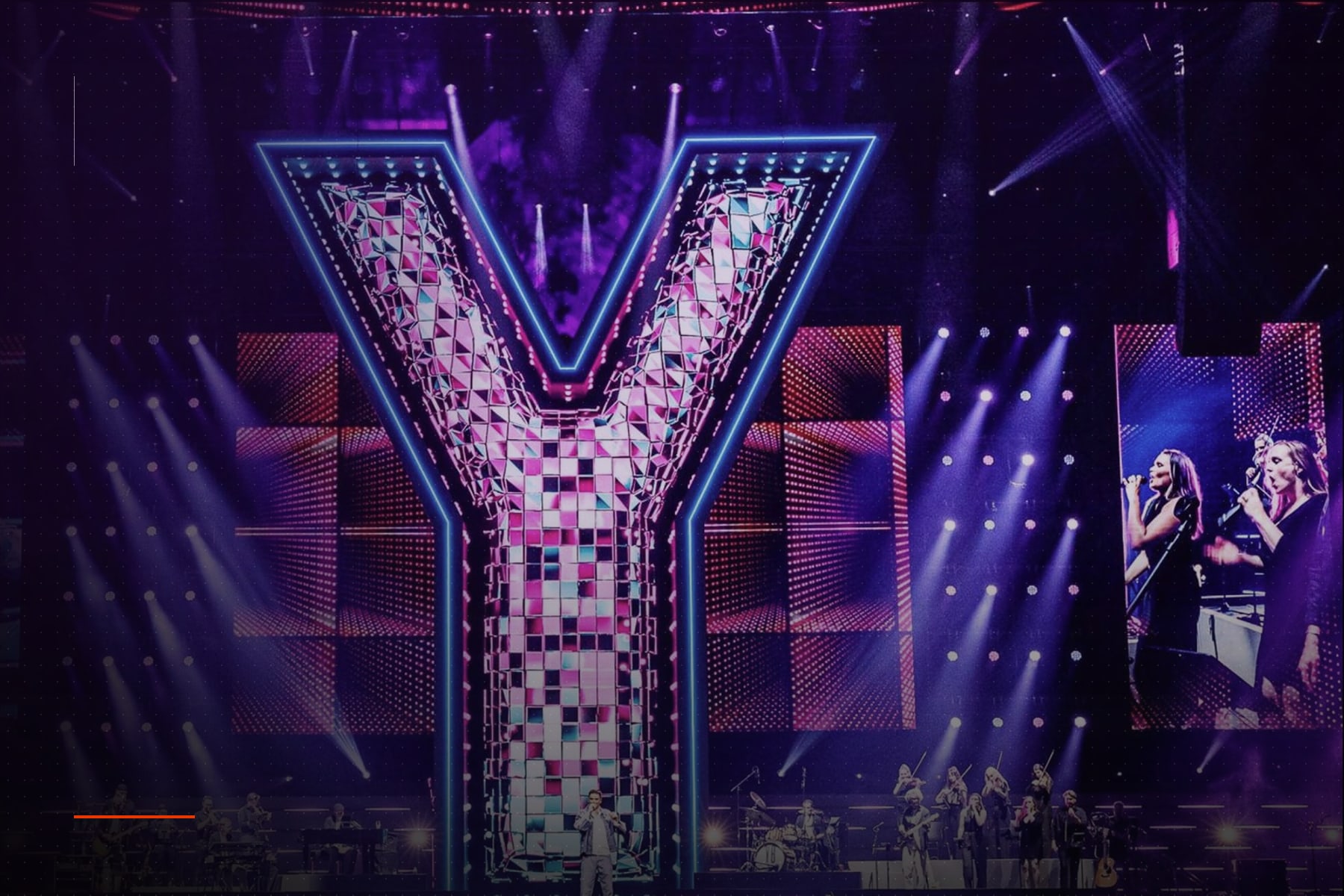
Rental LED screens are built to be assembled, shown and taken down hundreds of times a year. That changes everything about how they are designed and how a crew works with them. This guide walks through a rental LED wall build from rigging to line check, explains what makes a touring cabinet fast and safe, covers curved and creative configurations, and lists the pre-show checks used on concert stages, conferences and outdoor events.
The build order of a rental LED wall
- 01Rigging: header bars fly from the truss on certified points with a load calculation per point; ground-stacked walls get base frames, rear bracing and ballast.
- 02Cabinets: 500 × 500 mm or 500 × 1000 mm rental panels hang from the header and lock to their neighbours with quarter-turn locks and alignment pins.
- 03Power and data: each column is daisy-chained with a redundant data loop closed at the last cabinet and power distributed from a dimmer-city or distro.
- 04Processing: the LED processor maps the wall, loads the cabinet calibration and locks to the show frame rate and the media server.
- 05Line check: a test pattern walks every cabinet before content is loaded, and the wall is white-balanced to the lighting rig.
What makes a touring LED cabinet fast
Weight and tooling. A 500 × 1000 mm cabinet under 25 kg lets a two-person crew hang a ten-metre wall in an afternoon. Tool-free locks, front-serviceable modules, hot-swappable power supplies and receiving cards keep the schedule when something fails at 22:00. Cabinets that share one frame across indoor and outdoor pitches let a rental house build any show from one inventory.
A rental wall is judged by how quickly it comes down, not only how good it looks up.
Curves, corners and floors
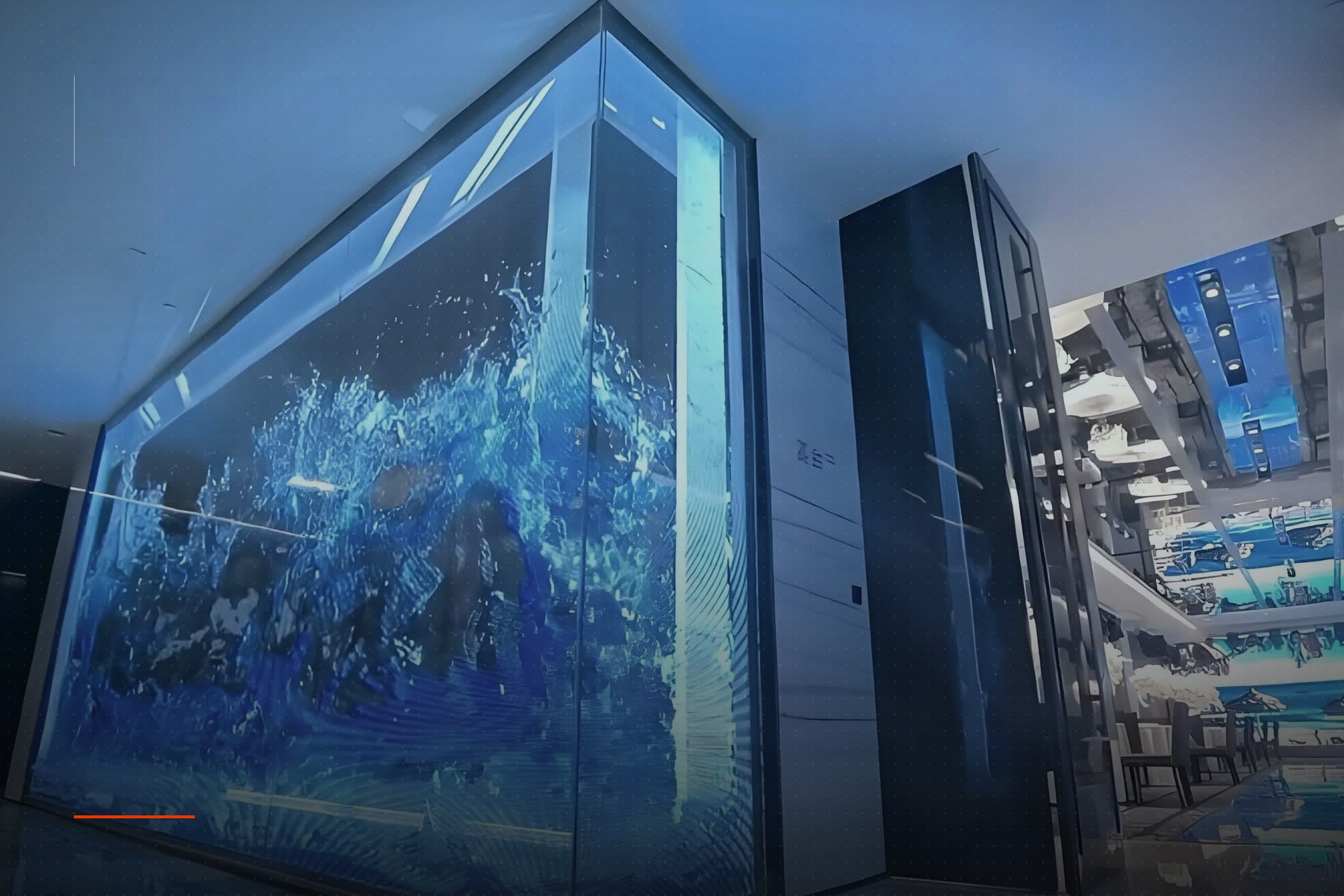
Touring cabinets curve in locked steps — typically ±10° or ±15° between neighbours — so the same stock builds flat, concave and convex sets. Corner cabinets extend the system into right angles and cubes; load-bearing floor cabinets with anti-slip surfaces carry performers and dollies; transparent rental cabinets build see-through backdrops for concerts and sports. Plan the ground support or trussing for the final geometry, not the flat drawing.
Outdoor rental LED
Festival and outdoor stages need IP65 cabinets, 4,000 to 5,000 nits, rear cable glands and wind-load calculations for the ground-support structure. Outdoor rental pitches of 3.9 to 5.9 mm serve most main stages; 7.8 to 10.4 mm suits side screens and delay towers viewed from far back.
Pre-show checks that matter
- 01Rigging certificates and load calculation per truss point, with secondary safeties fitted.
- 02Brightness and colour calibration applied on site with the show lighting, not only at the factory.
- 03Refresh rate above 3,840 Hz — 7,680 Hz for broadcast — for camera-facing shows.
- 04Redundant data loop confirmed by pulling a cable during line check.
- 05IP rating, cable glands and drip loops for outdoor dates.
- 06Spares on the truck: 5% of the wall in cabinets, modules, power supplies and receiving cards.
Rental versus purchase
Events under a few weeks a year rent; venues, studios and houses of worship with year-round use buy. A rental-grade cabinet bought for permanent installation costs more than a fixed-install product but keeps its resale value and tolerates reconfiguration. For touring productions, dry-hire from a rental house with matching inventory avoids mixed batches and colour differences on stage.
Frequently asked questions
How long does it take to build a rental LED wall?
A two-person crew hangs about 20–30 m² of lightweight rental cabinets per hour, so a 10 × 5 m stage screen goes up in an afternoon including line check.
What pixel pitch is used for stage LED screens?
Indoor stages use 2.6–3.9 mm; outdoor main stages 3.9–5.9 mm; side screens and delay towers 7.8–10.4 mm.
Can rental LED screens be used outdoors?
Yes, with IP65-rated cabinets, 4,000–5,000 nits brightness and a wind-load-calculated ground support or trussing.
What refresh rate is needed for LED on camera?
At least 3,840 Hz for corporate and concert video, and 7,680 Hz or higher for broadcast and film.