Transparent LED displays for shop windows and glass façades: mesh, film and glass compared
Transparent LED mesh, adhesive LED film and glass-encapsulated panels let a window stay a window while it plays. Transparency, pitch, brightness, installation and content rules for each.
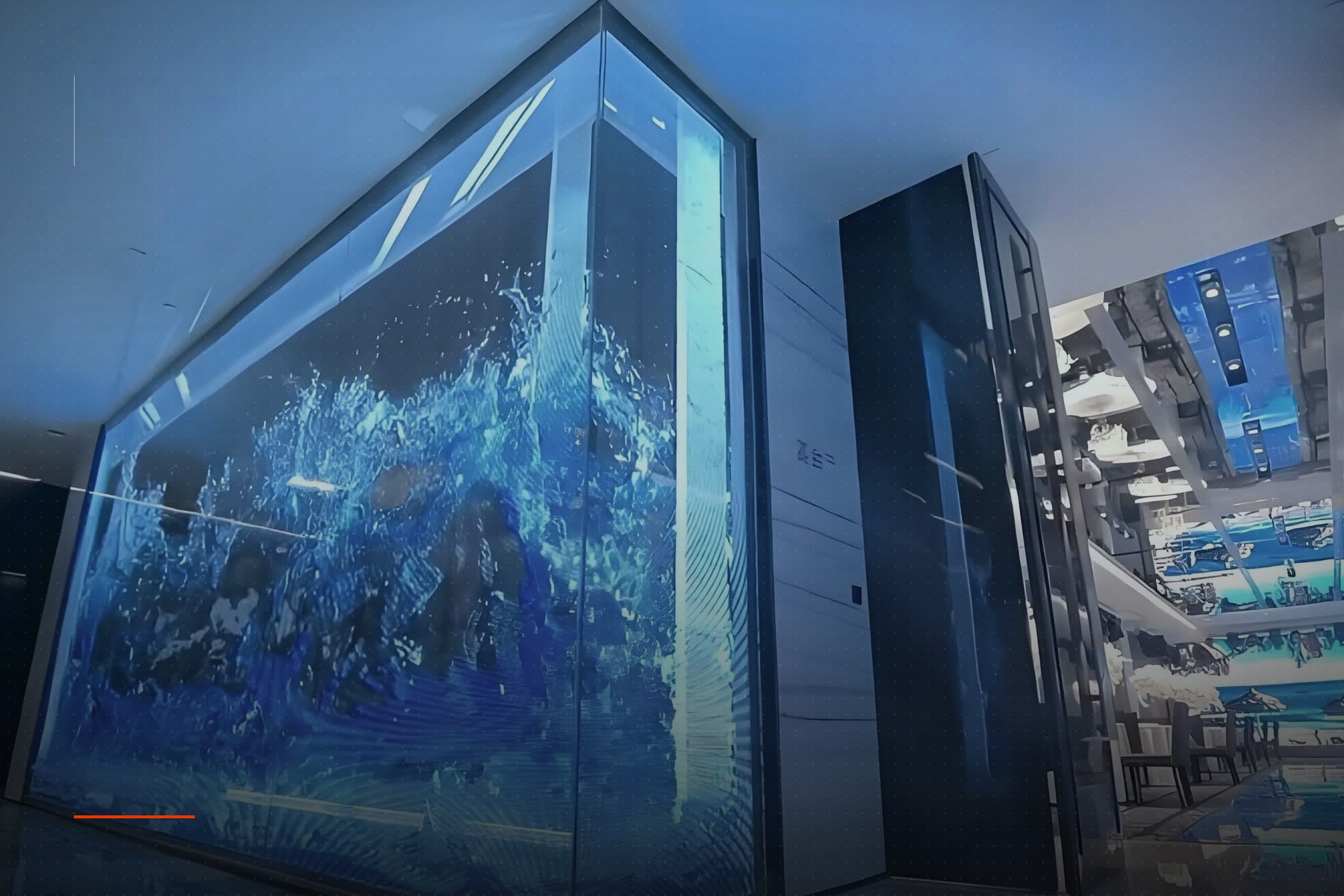
Transparent LED turns glass into media without blocking light, views or the products behind the window. It has become the preferred technology for retail storefronts, glass atriums, showrooms and building façades where a solid screen would be unacceptable. There are three transparent LED families, and they differ in transparency, pitch, brightness and how they install. This guide compares transparent LED mesh, LED film and glass-encapsulated LED, and sets out the content and specification rules that make transparent displays work.
Three ways to see through a screen
Transparent LED mesh and strip modules
Horizontal LED strips on a lightweight frame hang behind existing glass, reaching 70–90% transparency at 5–10 mm pitches. They are bright (up to 5,000 nits), serviceable from inside and the most economical route to large window displays and glass façades.
Transparent LED film
A flexible, adhesive film under 2 mm thick with the LEDs embedded in a transparent circuit bonds directly onto existing glazing. Pitches of 5 to 10 mm, transparency around 80%, no frame and no visible structure — the right choice for retrofits, curved glass and heritage façades where nothing can be fixed to the building.
Glass-encapsulated LED
The LED layer is laminated inside the glass unit itself, so the display is the façade or the partition. Specified with the glazing contractor at design stage, it delivers the cleanest look — no frame, no film edge — and is used in flagship stores, showrooms and glass boxes where the screen must disappear when off.
Transparency is a trade against pitch
Every extra LED costs light. A 3.9 mm transparent panel holds around 65% transparency; at 6.25 mm around 75%; at 10 mm, 85–90%. Decide first what the space needs from the glass — daylight, a view, a product on display behind the window — and let that set the pitch rather than choosing the finest pitch and losing the transparency that justified the product.
The best transparent display is the one nobody notices until it plays.
Brightness for transparent LED in daylight
Transparent screens compete with the daylight coming through them. Street-facing installations need 3,000 to 5,000 nits with automatic dimming; interior partitions and atrium glass manage with 1,000 to 2,000. Because there is no black backing, contrast comes from the darkness behind the glass — a bright interior behind a window display weakens the image.
Content rules for glass
- 01Design on black: black pixels are off, so black is see-through. Dark backgrounds keep the view and the transparency.
- 02Keep motion large and slow; fine detail disappears against a busy street.
- 03Use bright, saturated elements on a dark field — outlines, particles, product cut-outs.
- 04Schedule brightness by daylight and drop to 20–30% at night.
- 05Leave the lower 60 cm of a window clear if products sit on the sill.
Installation and service
Mesh modules need a top rail, power drops every module column and a service path from inside. Film needs clean, flat or gently curved glass and an edge connector; retrofits take hours, not days. Encapsulated glass replaces the glazing unit and follows the façade programme. In all three cases, plan cable routes and the controller location before the shopfitting is finished.
Choosing between mesh, film and glass
- 01Large façade or long shopfront on a budget: transparent mesh.
- 02Retrofit onto existing or curved glass with no frame: LED film.
- 03New-build flagship or showroom where the screen must vanish: glass-encapsulated LED.
- 04Rental and events: transparent rental cabinets with quick locks and 3.9–7.8 mm pitch.
Frequently asked questions
How transparent is a transparent LED screen?
Between 65% and 90% depending on pitch and type: about 65% at 3.9 mm, 75% at 6.25 mm and 85–90% at 10 mm mesh or film.
Can transparent LED be installed on existing glass?
Yes. LED film bonds directly onto existing glazing and mesh modules hang behind it; only glass-encapsulated LED requires replacing the glazing unit.
Is transparent LED bright enough for daylight?
Street-facing products reach 3,000–5,000 nits, sufficient for daylight with automatic dimming. Interior partitions need 1,000–2,000 nits.
What content works best on transparent LED?
Bright elements on a black background. Black is transparent, so the view stays open and the image appears to float on the glass.