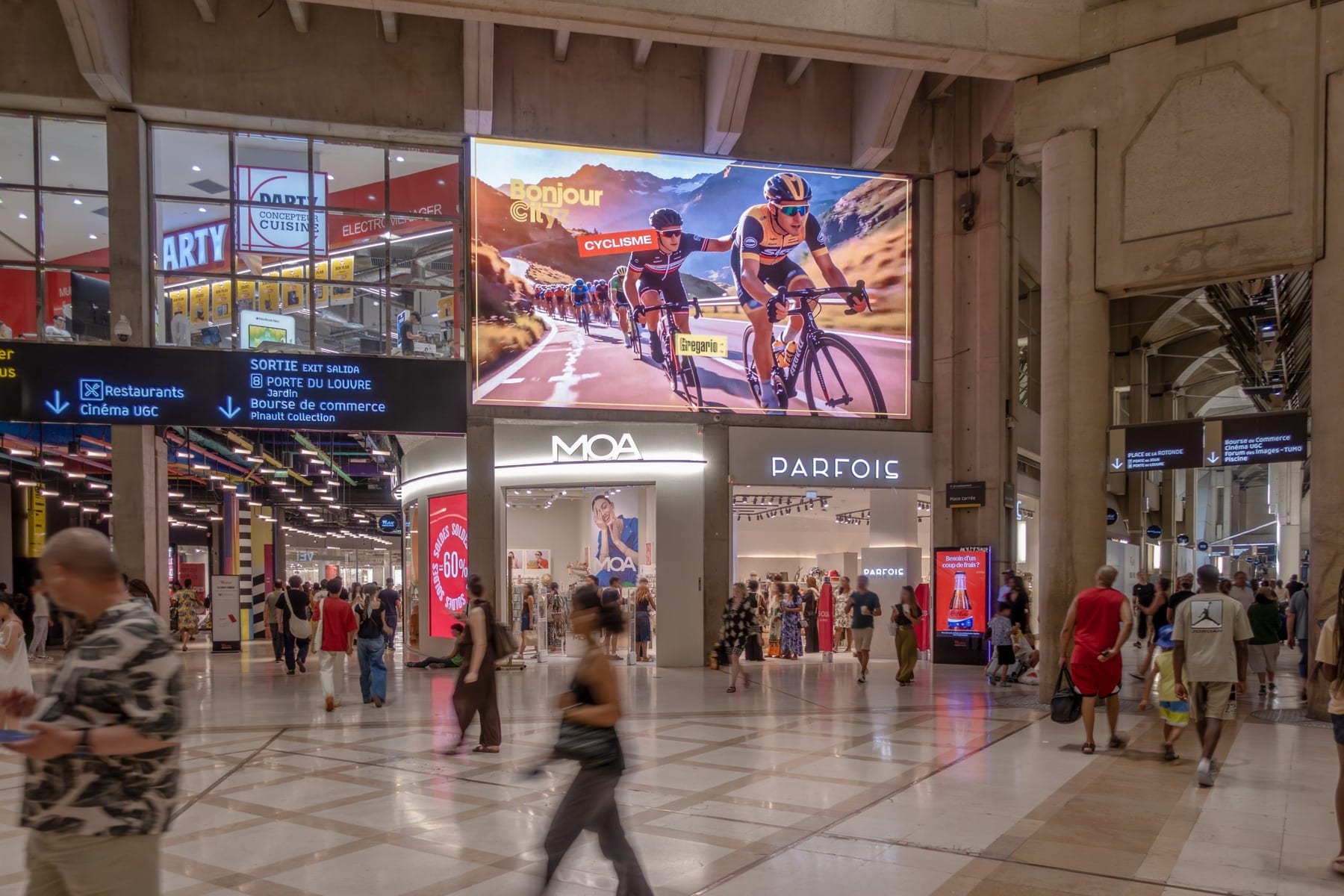
LED wall or projector? Choosing for events, auditoriums and meeting rooms
LED wall vs projector for events, auditoriums and meeting rooms: brightness in nits vs lumens, contrast, size, rigging, cost and lifespan, plus a decision tree.
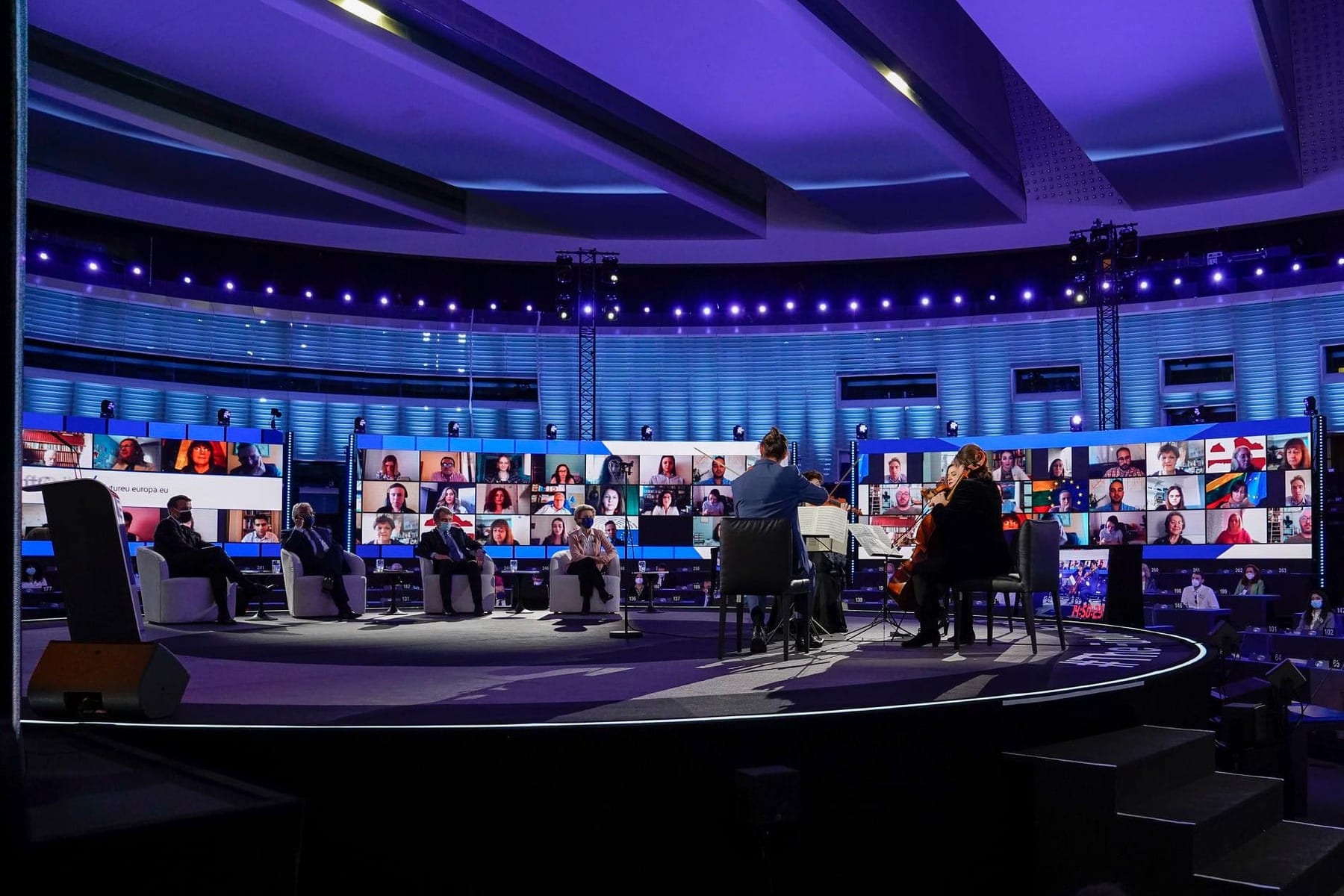
LED wall vs projector is the question every event producer, venue manager and facilities team asks at some point, and the answer usually turns on a single variable: how much light is in the room. In a cinema-dark auditorium a projector is still an economical and perfectly good choice; in a hotel ballroom with the dinner lighting up, or a conference hall with glass down one side, even the most powerful projector looks washed out. This guide starts with a five-question decision tree, works through eight criteria with numbers, compares three real scenarios, and ends with an honest list of the cases where projection is still the right call.
A decision tree: LED wall vs projector in five questions
Answer the questions in order. The first two set the technical limit; the last three settle the economics. Whether you need an LED screen or projector for events is usually clear by the second question, and the remaining three only matter for projects that sit on the border.
- 01Ambient light: can you keep the room below roughly 50 lux for the whole show? If not, LED. If yes, continue.
- 02Image width: do you need a single seamless image wider than 5 m? If yes, LED. Below 3 m, LCD or a projector. In between, it comes down to budget.
- 03Hours of use per year: a venue running more than 1,000 hours a year favours owning LED on operating cost; for a handful of events, rental makes sense with either technology.
- 04Budget: if the room can be darkened and money is tight, a single projector is the cheapest picture there is. If it cannot, the second projector, the blending and the operator close most of the gap to LED.
- 05Portability and setup: if two people, one power socket and one hour is the brief, projection. If rigging points, three-phase power and a four-person crew can be booked, LED.
The direction this tree points is not a surprise: LED in bright rooms, projection in dark ones. Everything in the grey zone in between — a half-dimmed ballroom, a 4 m image, ten events a year — is settled by the criteria below, and each of them is argued with numbers rather than adjectives.
LED wall vs projector on eight criteria
1. Brightness: lumens and nits are not the same thing
A projector's lumen rating is the total light leaving the lens; what the audience sees is the light reflected by the screen, measured in nits (cd/m²). For a matte white screen with a gain of 1.0 the working formula is simple: nits ≈ lumens ÷ (screen area in m² × 3.14). A 6 m wide 16:9 screen is about 20 m². A 10,000-lumen projector produces at best 10,000 ÷ (20 × 3.14) ≈ 160 nits on it, and after lens losses, an ageing light source and colour correction, 100–130 nits in practice.
A 1,000-nit LED wall on the same surface is six to ten times brighter. That gap is invisible in the dark: the cinema standard is 48 nits, so 160 nits is ample in a blacked-out room. It is also why a projector that looked fine at the technical rehearsal disappears once the dinner lighting is up. The trouble is not the projector; it is the arithmetic of spreading a fixed number of lumens over twenty square metres.
2. Contrast and black level
If the room lighting puts 300 lux onto the screen, a matte screen reflects 300 ÷ 3.14 ≈ 95 nits back at the audience. The projector's white becomes 160 + 95 = 255 nits and its black 95 nits: a contrast ratio of 2.7:1, light grey on grey. A black-masked LED surface reflects only 3–5% of the same 300 lux, so black sits at 3–5 nits against a 1,000-nit white and contrast stays above 200:1. The 2,000:1 figures in projector brochures are measured in a dark room and stop applying the moment the house lights come up; an LED wall's data sheet and its performance on stage do not diverge.
3. Size and seamlessness
Beyond 6–7 m a single projector either runs out of brightness or needs a second unit with edge blending, and the blend zone shows a brightness step and colour drift visible up close even on well-aligned systems. An LED wall tiles in every direction from 500 × 500 mm or 500 × 1,000 mm cabinets: 128 small cabinets for 8 × 4 m, 64 for 4 × 4 m. The picture is one piece, and stage ratios such as 2:1 or 3:1 are produced natively rather than letterboxed onto a screen. Curved or angled backdrops use the same cabinets; with projection they mean geometry correction and further light loss.
4. Setup time and rigging
A single projector goes in with two people in an hour; adding a second unit, blending and geometry takes another hour or two and a technician who knows the software. A 32 m² LED wall takes four technicians four to six hours, but it demands more planning up front: at 7–8 kg per 500 × 500 mm cabinet, 128 cabinets come to roughly a tonne, so the venue's rigging points must be certified for the load, or 1–1.2 m of depth reserved behind the stage for a ground-supported build. Once it is up, the advantage flips: on a multi-day event there is no refocusing, realignment or re-blending to do.
5. Sightlines and shadows
With front projection the beam crosses the room: a 6 m image through a 1.5:1 lens puts the projector 9 m from the screen, and every presenter, camera jib or banner crossing the beam throws a shadow onto the picture, so the presenter cannot stand in front of the screen. Rear projection solves the shadow but needs about 5 m behind the screen with a 0.8:1 lens, 30 m² of lost ballroom floor. An LED wall has neither beam nor shadow; the speaker can talk in front of it and the wall becomes the set. That freedom, more than brightness, is why stage LED screens are the default for launches.
6. Maintenance and lifespan
Lamp-based projectors run 2,000–4,000 hours per lamp; laser light sources reach half brightness at around 20,000 hours, and a system that was marginal to begin with usually stops being acceptable at 8,000–10,000 hours. Dust filters, colour wheels and lens cleaning create routine work. LED walls are rated to 100,000 hours; in a hall used 1,500 hours a year, that is longer than the technology will stay current. A failure is confined to a single module, and on rental cabinets a module is swapped in minutes without powering down. With a single projector, a failure takes the whole picture with it.
7. Rental cost
A day rate on its own is misleading because the two systems do not do the same job. One projector and a fast-fold screen rents for clearly less than an LED wall of the same picture size. But as soon as a bright room demands a second projector, edge blending, a media server and a projection technician, the gap narrows. If the room has to be darkened, the invisible costs arrive: drapes, dimmed decorative lighting and lost sponsor visibility. LED rental is quoted per square metre per day, and pixel pitch, quantity and season set the band. The worked comparison is a separate section below.
8. Power
This criterion goes to the projector, and it should be said plainly. A 10,000-lumen laser projector draws 1–1.5 kW from a single-phase socket. A 32 m² wall at 2.6 mm can approach 20 kW on a full white frame at per-cabinet peak values; on typical video content it averages 6–9 kW, but the installation is sized to the peak. For LED that means a three-phase 32 A feed, a distribution board and a separate power plan. Most hotels and congress centres have that infrastructure ready; in historic buildings and temporary tents, a generator line goes into the budget.
In a bright room the question is not which picture looks better. It is which picture can be seen.
Scenario A: a 400-guest launch in a hotel ballroom
The stage is 10 m wide, 400 guests sit at dinner tables, house lighting stays at 150–300 lux through the meal and the event is streamed. As the stage LED screen we propose an 8 × 4 m XR Event wall at 2.6 mm pitch: 32 m², 3,072 × 1,536 pixels, 800–1,200 nits and a refresh rate above 3,840 Hz for the cameras. The wall is flown from the ballroom's rigging points or ground-supported, and four technicians hand it over in five hours. Content is produced at 2:1 in native resolution. Brightness is trimmed to 60–70% for camera exposure and the dinner lighting stays as the lighting designer planned it.
The projection alternative is two 12,000-lumen units edge-blended onto an 8 × 4.5 m screen: about 36 m² and, after blending losses, around 150 nits. To make that readable, the dinner lighting has to come down, and either a projector tower stands 12 m back among the guest tables or 5 m of depth behind the stage goes to rear projection. Sponsor logos, speaker close-ups and the product film come through the cameras in grey. Here LED earns its budget difference on stage, in a difference everyone in the room can see, which is why launch teams now arrive asking for an LED screen instead of a projector.
Scenario B: a corporate auditorium with daylight
A corporate auditorium: 300 seats, undraped glass down one side, 400–600 lux measured on stage during the day, 1,200 hours of use a year and most sessions recorded. A 20,000-lumen projector on a 7 m screen produces 230 nits on paper; 500 lux of ambient light reflects 160 nits off the screen and contrast falls to 2.4:1. Slide text remains legible, but photographs, video and dark-background slides fade. Drawing the blinds would solve it, except that the architect designed the daylight as the room's identity and the operations team does not want to black out the hall for every session.
As the conference room display, a 7 × 3.5 m XR Fine wall at 1.9–2.5 mm leaves the room as designed: 800–1,000 nits, run at 50–70% by day and 30% in the evening. With the front row at 4 m, 2.5 mm is comfortable and efficient enough for the back row at 25 m. The image is one piece, indifferent to stage lighting and flicker-free on camera. For a hall running 1,200 hours a year, 100,000 hours of LED life against 20,000 hours for a laser source is a different investment horizon. If the wall must also travel to trade shows or outdoor stages, dual-purpose XR Twin cabinets serve both.
Scenario C: a boardroom under 3 m
Not every room justifies an LED wall. In a twelve-seat boardroom with a 2–2.5 m image, a short-throw laser projector on an ambient-light-rejecting screen, or a 98-inch LCD, is sufficient and cheaper. LED's cost per inch loses to LCD below 3 m, and a surface watched from 1 m away needs a pitch under 1 mm. The cases for LED at this scale are specific: briefing rooms that want a bezel-free, flush surface; glass offices where daylight cannot be controlled; and wide-format walls above 3 m. There, XR Fine and all-in-one LED displays of 108–136 inches replace projector and screen with a single unit installed in a day.
Rental cost comparison: the same event, two budgets
Because price bands move with exchange rates and season, this section gives ratios, not figures; the current per-square-metre rate is confirmed at quotation. At the scale of Scenario A, a single projector and screen package rents for roughly a third to a half of an LED wall of the same picture size. Add the second projector, blending, media server and technician that a bright room needs and the difference narrows to a 10–30% band. Where blackout, extra drapes and lighting changes are required, LED is often ahead on total cost. On a three-day congress the LED day rate falls because the build happens once, while the projection line stays fixed.
On the purchase side the equation is different. In a hall used more than 1,000 hours a year, LED's higher initial investment is repaid by what it removes: lamp and laser replacements, blackout systems, and the events lost to other venues over visibility. For a hall used a few times a year, renting LED per event is the better answer: keep the permanent projection infrastructure and bring in an LED wall for the days that matter. Our LED rental guide covers the questions to ask when requesting a quote.
When a projector is still the right call
The purpose of this guide is not to dismiss projection but to draw its boundary. In the following cases a projector is not merely adequate but usually the better solution, and we say so in our own proposals.
- 01Rooms that can be darkened: cinemas, theatres and evening shows. Below 50 lux a 100–160-nit image exceeds the cinema standard, and LED's brightness is no advantage.
- 02Mapping onto architecture: projection onto façades, domes and sculpture cannot be imitated by LED; the texture of the surface is part of the picture.
- 03Very tight budgets and one-off small meetings: one unit, one screen, one socket.
- 04Stage designs that want a soft, textured image: some theatre and dance productions prefer the diffuse character of projection.
- 05Touring presentations where portability decides: for a team travelling city to city with a 20 kg case, LED logistics make no sense.
Switching from projector to LED screen: a checklist
When moving a venue or an event from projection to LED, settle these points beforehand and the quotation process closes in one round instead of three.
- 01Ambient light measurement: lux at the screen position in daylight and under event lighting.
- 02Image width and aspect ratio: unless 16:9 is mandatory, a 2:1 or 3:1 ratio to suit the stage.
- 03Closest viewing distance: it sets the pixel pitch; under 2.5 m calls for a pitch below 2.5 mm.
- 04Rigging points and floor: certified rigging capacity, or depth for a ground-supported build.
- 05Power: three-phase feed, cable run and distribution, calculated on the peak value.
- 06Broadcast: if cameras are present, refresh above 3,840 Hz and a brightness target for exposure.
- 07Content: production at native resolution, and processor inputs for presentation, camera and media server.
Frequently asked questions
LED wall vs projector: which is better for events?
If the room cannot be darkened or the image is wider than 5 m, an LED wall; in a dark room with an image under 5 m, a projector is sufficient and cheaper. For launches, galas and conferences where the lights stay on and cameras are present, LED is the standard for visibility, a seamless picture and a shadow-free stage.
Is an LED screen visible in daylight?
Yes. Indoor LED walls deliver 800–1,200 nits and outdoor models 5,000 nits and more. In a glass-walled conference hall at 500 lux, a 1,000-nit LED wall holds contrast above 100:1, while a 20,000-lumen projector in the same room sits near 2.5:1. Surfaces in direct sunlight need outdoor-grade brightness rather than an indoor wall turned up.
How many lumens does a projector need to match an LED wall?
Rule of thumb: lumens required ≈ target nits × screen area in m² × 3.14. On a 20 m² screen, 1,000 nits needs more than 60,000 lumens, which means stacking three or four of the largest venue projectors. Even an acceptable 300 nits in a lit room takes about 19,000 lumens and two units.
Is renting an LED wall more expensive than a projector?
Compared with a single projector and screen, yes: the LED wall's day rate is two to three times higher. For equivalent visibility in the same room, adding a second projector, blending, a media server, a technician and blackout narrows the gap to 10–30%, and on multi-day events it often closes. The right comparison is the total cost of the same visibility, not the day rate.
Does an LED wall fit in a meeting room?
It does; fine-pitch cabinets under 30 mm deep recess flush into the wall, and 108–136-inch all-in-one LED displays install as a single unit in a day. Below 3 m of image width, however, LCD or short-throw projection is usually more economical; LED earns its place when a bezel-free surface, daylight or a width above 3 m is required.
Above what size does LED become unavoidable?
In a dark room a single projector serves up to 6–7 m; beyond that, edge blending is required and the blend zone becomes visible. In a lit room the limit arrives much earlier, at 3–4 m, because lumens are divided by screen area. Practical rule: lights on and an image above 4 m means LED is the only realistic option.
If you want the right technology for your venue settled by measurements rather than opinion, send the event date, room dimensions and ambient light details through our Start a Project page; the Xeron team will return a comparative proposal with pixel pitch, size and an installation plan.