Curved LED screens: designing concave, convex and wrapped LED walls for architecture
Curved LED walls turn surfaces into environments. Radius, cabinet size, angle-lock precision, structure and content — what architects and integrators need to settle before the first drawing.
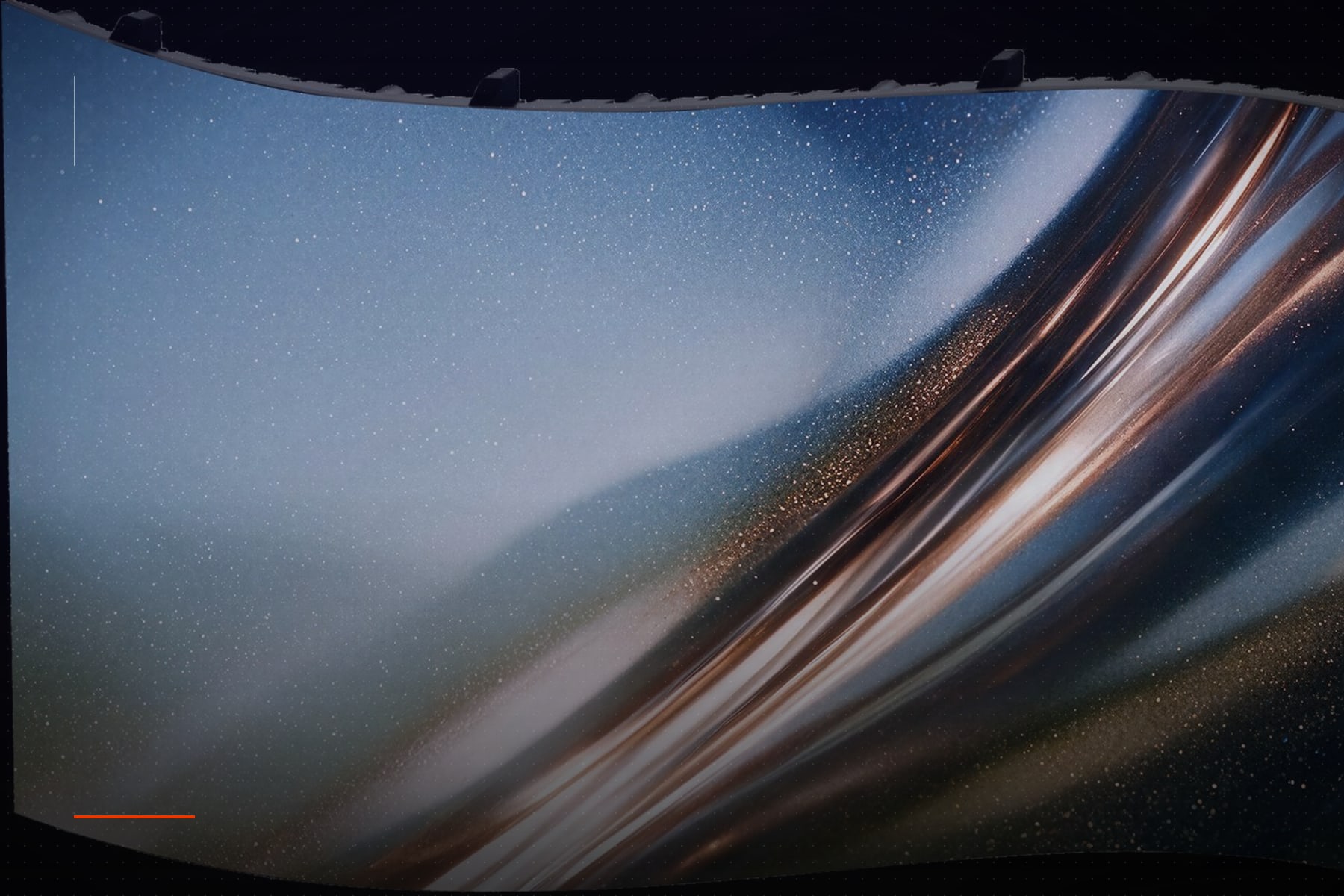
Concave, convex, wrapped, cylindrical — curved LED surfaces are the point where display technology becomes architecture. They are also where projects go wrong when the radius is decided late, the cabinet size is chosen by habit and the content is authored on a flat timeline. This guide explains the two ways to curve an LED screen, how radius drives every other decision, what changes structurally, and how to plan content for a curved LED wall.
Two ways to curve an LED screen
Rigid cabinets with angle locks
Standard 500 × 500 mm or 500 × 1000 mm cabinets lock to their neighbours at fixed angles — typically ±5°, ±10°, ±15° up to ±30° — building faceted curves that read as smooth from viewing distance. This is the workhorse of curved LED walls for rental stages, lobbies and auditoriums because it uses the same stock as flat walls.
Flexible LED modules
Soft, bendable modules on a rubber or flexible PCB base curve continuously for tight radii, columns, ribbons and organic forms, with pitches from 1.5 to 4 mm. They mount to a curved substrate built by the fit-out contractor. Most large installations combine both: rigid cabinets for the broad sweep, flexible modules for the tight returns.
Radius drives everything
A 500 mm cabinet at 10° increments produces a radius of about 2.9 m; at 15° about 1.9 m; at 30° about 1 m. Tighter radii need smaller cabinets, more angle steps or flexible product. Decide the radius early — it determines the product family, the sub-structure and the content pipeline. Convex curves (bulging towards the viewer) are more forgiving of facet seams than concave curves, where the viewer sees every joint edge-on.
Content for a curve is authored in the space, not on a flat timeline.
Structure and service access
Curved walls change load paths. Hanging systems need adjustable rigging so each column can be trimmed to the arc; ground-stacked builds need footings engineered for the curve and lateral bracing at the ends. Rear service is often the only practical option on concave walls where the front is a finished surface, so plan a maintenance corridor of at least 600 mm behind the cabinets. On convex walls facing a public space, specify front-serviceable modules.
Angle-lock precision and seam visibility
A seam shows at one degree of error. Cabinets should lock to the specified angle mechanically, not rely on the installer’s eye, and the frame should carry alignment pins that register the LED surface rather than the cabinet housing. Ask the manufacturer for the locking angle tolerance and for seam-compensation in the processor, which adjusts brightness at facet joints.
Content for curved LED walls
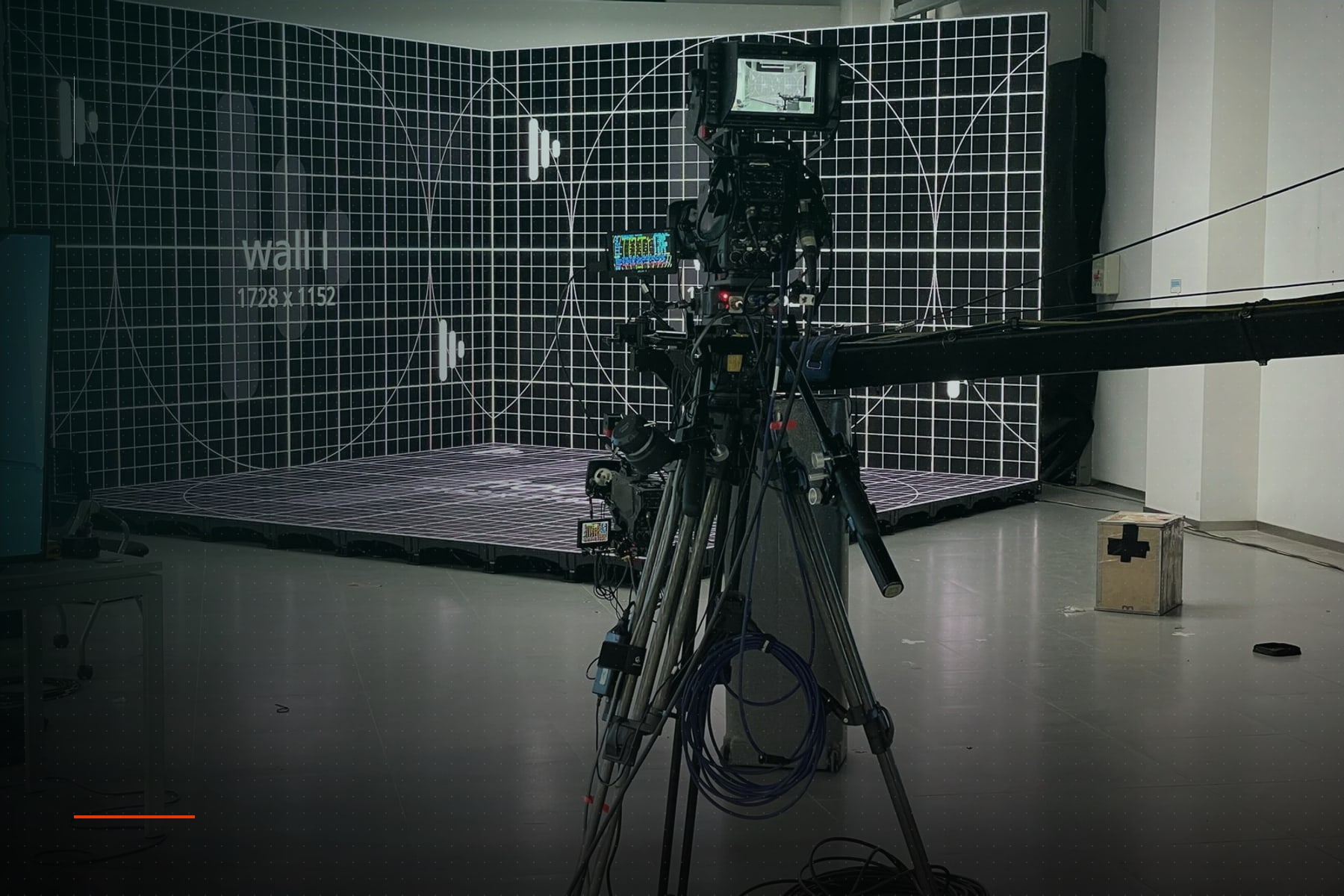
Flat content wrapped onto a curve stretches at the edges and confuses perspective. Author in a 3D scene that matches the built geometry, render from the primary viewing position, and map each cabinet column to its real-world angle in the processor. Slow camera moves and depth cues exploit the curve; hard edges and text across facets fight it.
Checklist for the design phase
- 01Define radius, total arc angle and whether the curve is concave or convex to the viewer.
- 02Choose cabinet size to the radius, not the other way round; consider flexible modules under 1 m radius.
- 03Confirm angle-lock precision and seam compensation with the manufacturer.
- 04Design the sub-structure for the curve, including service access and cable routes.
- 05Author content in a 3D scene matching the built geometry and calibrate on site after installation.
Frequently asked questions
What is the minimum radius for a curved LED wall?
With 500 mm rigid cabinets at ±30° the practical minimum is about 1 m. Below that, use 250 mm cabinets or flexible LED modules, which bend to radii of a few hundred millimetres.
Can rental LED cabinets be curved?
Yes. Most rental platforms lock at ±5° to ±15° between neighbours, allowing concave and convex stage designs from the same flat-wall stock.
Concave or convex — which is easier?
Convex curves hide facet seams better because the viewer sees the joint at an angle. Concave curves need tighter angle tolerance and seam compensation.
How do you make content for a curved LED screen?
Build the wall geometry in a 3D application, animate in that scene, render from the main viewing position and map columns to angles in the LED processor.