Why LED screens now lead outdoor advertising: DOOH versus static billboards
Why the outdoor advertising LED screen has overtaken the static billboard: programmatic DOOH, content changed in minutes, day-parting, owner revenue and ROI for Istanbul.
An outdoor advertising LED screen does something a printed billboard never could: it changes its message in minutes, shares its face between eight or ten advertisers and stays legible at noon. That is why digital out-of-home, or DOOH, has moved from the margins of media plans to the centre of them in most large cities, Istanbul included. This guide is for advertisers, agencies and the owners of malls and buildings weighing a digital billboard: what separates LED from static, what a site earns, what a campaign returns and what the municipality will ask for.
From printed billboards to DOOH: how outdoor advertising changed
For most of the twentieth century outdoor advertising meant paper. A poster was printed, pasted onto a board by a crew and left for two or four weeks; backlit vinyl and scrolling frames refined the format over the decades, but the underlying economics never moved: one message, one advertiser, one long booking, and a lorry every time anything changed.
LED changed the unit of sale. Once a surface could show any content at any moment, the panel stopped being a poster and became a schedule. Rates moved from a flat monthly rental to a share of a loop, then to time-of-day pricing, then to per-play buying through programmatic platforms, and brightness that finally beat the sun made LED the default for new sites on main arteries and mall exteriors.
What is DOOH?
Digital out-of-home is any advertising shown on a screen in a public space: roadside LED billboards, mall façades, transit screens, petrol-station canopies, airport approach roads. What separates it from digital signage in general is that the inventory is sold to third parties as media. When an owner sells an LED screen's loop to advertisers, the site becomes DOOH inventory, and the metrics applied to it, impressions, reach, frequency and CPM, are the same ones used online.
Seven differences between a static billboard and an LED advertising screen
Content changes in minutes, not weeks
A static poster is committed at the printer; a creative change means a reprint, a crew and a week of lead time. On an LED screen a new file is uploaded to the player and is live in minutes, usually remotely. A retailer can move from a morning coffee message to an evening dinner offer, and a bank can react to a rate announcement the same day.
Several advertisers share one location
A printed panel has one client for the whole booking. An LED loop typically carries six to ten advertisers, each with a ten-second spot, repeating continuously through the day. For the owner that means several revenue lines on one surface; for the advertiser it means a landmark location without having to hold the whole surface, in exchange for sharing the audience with other brands.
Daylight visibility at 5,000 to 8,000 nits
A backlit vinyl panel is a light source at night and a reflective surface by day. An outdoor LED screen runs at 5,000 to 8,000 nits on a typical street-facing site and up to 10,000 nits on a south-facing façade, so it stays readable at midday when a printed poster has faded to a pale rectangle. LED wins the daytime, when most traffic passes; our outdoor brightness guide covers the numbers.
Measurement and impressions
A static site is sold on a traffic count from a survey that may be years old. Digital sites are sold on impressions calculated from traffic data, viewing-angle models and the advertiser's share of the loop, updated as the counts change. That does not make DOOH as measurable as a web page, but it puts the medium on the same reporting sheet as digital budgets, with a CPM an agency can compare across channels.
Programmatic buying
Because each play on an LED screen is a discrete event, it can be bought as one. Programmatic DOOH lets an advertiser buy plays on many screens through a platform, set rules such as weather, time or audience density, and change the mix daily. In Turkey this is still a small share of DOOH spend, but it is where demand from performance-minded buyers is arriving, and a site not connected to it cannot sell into it.
Day-parting
The audience in front of a screen changes through the day: commuters in the morning, shoppers at noon, families in the evening, night-life after ten. A static poster shows them all the same message. An LED screen can carry a coffee brand until eleven, a lunch offer until three and a cinema listing after dark, and the owner can price those windows differently. Day-parting is the simplest reason an LED loop earns more than a poster in the same frame.
No print or installation cost per campaign
Every static campaign carries a production line: large-format printing, transport, a crew with a lift and disposal of the old vinyl. On LED the production cost is a motion file. For an advertiser running frequent creative changes the saving is significant; for the owner it removes crew visits, weather delays and the empty panel between clients. A digital billboard is never blank unless the owner wants it to be.
The revenue model for a building or mall owner
For a property owner the question is simple: does the screen pay for itself. The revenue mechanics are a loop of spots sold monthly. A common configuration is eight advertisers with ten-second spots in an eighty-second loop, so each advertiser appears forty-five times an hour. The owner sells the eight slots, keeps one or two for the property's own promotion if it is a mall, and tracks occupancy, the share of slots sold, month by month.
How to build the yearly model
Build the year from four terms and fill them with your own local rates rather than someone else's. Count the sellable slots, take the monthly rate that comparable inventory in the same district actually achieves, multiply by twelve months, then discount the result by the occupancy you can hold across the year rather than the one you hope for in month one. Seasonality lives inside that discount: most Istanbul inventory is quiet in deep winter and late summer and tight in the weeks before a holiday. Slots, rate, months, occupancy. Every one of the four is a decision the owner controls.
Two of those terms depend on who sells the loop. Selling direct keeps the full rate but needs someone calling agencies every week. Handing the inventory to a media house fills it faster and costs a commission, commonly 15% to 30% of what the slot brings in. Settle the terms before the screen is built: exclusivity or not, a minimum occupancy the seller must reach, who owns the client relationship, and how quickly an unsold slot reverts to the owner. A contract that lets a seller sit on empty inventory is the most damaging clause in the model, and it never shows up as a line in the spreadsheet.
Against the revenue sit the running costs, and each should be quoted locally before anything is ordered. Electricity, which automatic dimming keeps to a few percent of revenue on a well-configured screen. A content and scheduling service, whether in-house or contracted. The municipal advertising tax, which each district sets and publishes annually. Insurance for a façade-mounted structure. A maintenance contract covering spare modules, power supplies and a response time. And the permit file itself, including the structural and electrical reports the application needs.
Payback then becomes a division rather than a claim. Put the installed cost of the screen over the annual margin your own four terms produce, and run the same division at 50%, 60% and 70% occupancy to see how much of the answer depends on the sales plan rather than the site. A street-level screen of 30 to 50 m² on an existing façade, using XR Vision or the slimmer XR Edge, is a long-lived asset, so the sensible test is whether the site still works at the low occupancy figure. The realistic risk is not the hardware but a sales plan that assumes a full loop from month one.
- 01Traffic and dwell time: a junction with a red light sells at a premium because the whole loop is seen.
- 02Occupancy: eight slots sold ten months a year beats ten slots sold five months; a shorter loop fills faster.
- 03Screen size and pitch: a larger, sharper surface justifies a higher slot price but costs more to build and run.
- 04Sales channel: direct sales keep the commission but need a team; an agency fills faster and takes a share.
- 05Own-use value: for a mall, one or two slots promoting tenants and events carry a value that never appears on an invoice.
Reach and ROI for the advertiser: what an outdoor advertising LED screen delivers
For the advertiser the arithmetic runs the other way: the booking is fixed once the slot is taken, and the question is how many people it reaches and at what cost per thousand impressions. A useful model multiplies daily passing traffic by the share of that traffic with a clear line of sight to the screen and by the advertiser's share of the loop; agencies refine this with viewing-angle and speed adjustments, but those three factors explain most of the result.
Take a main artery or a mall entrance in Istanbul where around 120,000 people pass a day in vehicles and on foot. If half of them can see the screen and the advertiser holds one of eight slots, the campaign delivers roughly 225,000 qualified impressions a month. Divide the booking by those impressions in thousands and the result is the cost per thousand, the single figure that puts a screen on the same sheet as television, radio and online display. Do that division yourself rather than accepting the site's own version of it.
The inputs are where sites differ, so ask each one the same three questions: where the traffic count comes from and how recent it is, what share of it is credited with a clear line of sight, and how long the loop is. Two screens on the same street can quote impressions that differ by a factor of two purely through those assumptions, and a comparison built on the seller's numbers is not a comparison. Once the three inputs are stated on the same basis, the cost per thousand becomes a fair way to rank the sites against each other and against other media.
Frequency is the half of the model the impression total hides. Reach counts people; frequency counts how often each comes back, and on a commuter artery the same driver contributes ten or twelve times a week. That is why a two-week booking on one screen behaves differently from the same booking spread across ten screens even when the totals match: one builds recall, the other builds coverage. Day-parting sharpens the choice further. Buying only the windows in which your audience is actually in front of the screen raises the share of impressions that can convert, and it is the first lever an agency reaches for when a plan looks thin.
A screen costed this way rarely undercuts online display on cost per thousand alone, and a static poster in the same frame reaches the whole passing audience for a month. DOOH still wins budgets because of what surrounds the number: no ad-blocking, a large physical format, the credibility of a landmark location and frequency, because commuters pass the same screen ten times a week. The creative has to earn it. A driver sees the screen for five to eight seconds, so one frame must carry the message: one line, one image, one logo, high contrast.
Site selection: traffic, viewing angle, distance and pixel pitch
Most disappointments in DOOH come from the site, not the screen. Start with a real traffic count over several days and times, and separate vehicles from pedestrians because they see the screen differently. Then check the viewing angle: a screen parallel to the road is seen briefly and obliquely, while one angled ten to twenty degrees towards approaching traffic is seen head-on for the whole approach. Trees, signage, bridges and future construction can all take the line of sight away.
Dwell time is the multiplier. A red light, a bus stop, a pedestrian crossing or a mall entrance holds the audience long enough to see the entire loop, so every advertiser in it is seen, which is why such a site carries a higher slot price at the same traffic. On a free-flowing road each passer sees one spot at random: fine for reach, weak for frequency. Distance sets the pixel pitch: the closer the viewer, the finer the pitch, and the finer the pitch, the higher the cost per square metre.
Pixel pitch by viewing distance
- 015 to 15 m, pedestrian streets and mall entrances: 3.9 to 6 mm pitch, where fine text and product shots have to hold up.
- 0215 to 30 m, city streets and junctions: 6 to 8 mm pitch, the most common choice for street-level DOOH.
- 0330 to 60 m, main arteries and ring roads: 8 to 10 mm pitch, where a coarser pitch cuts cost with no loss at that distance.
- 04Beyond 60 m, motorways and large squares: 10 mm and above, with size doing the work that resolution cannot.
The XR Vision series covers this range for fixed outdoor installation, with the brightness and IP65 sealing a permanent roadside site needs. Where mounting depth is limited, on a slim façade or a canopy, XR Edge does the same job in a thinner cabinet. Glass façades on malls and showrooms call for XR Air, a transparent mesh that keeps daylight and the view from inside while showing content to the street, and sites exposed to impact or coastal weather suit XR Bastion. Our pixel pitch guide covers the distance calculation.
Municipal rules and light pollution
Outdoor advertising in Turkey is regulated at the municipal level. Metropolitan and district municipalities publish advertising and signage regulations that define where a screen may be placed, how large it may be relative to the façade, how far it must sit from junctions and traffic signals, and which permits are needed. A permanent LED screen usually requires an advertising permit, a structural and electrical review of the mount, the consent of the building's owners and the annual advertising tax; sites beside intercity roads also fall under the highways authority.
Light is the second file. Regulations set limits on luminance, prohibit flashing content near junctions and require a reduction in brightness after dark. In practice this means an ambient light sensor on the processor, a schedule that drops output to 30% to 40% of the daytime level at night, and content rules that keep the screen from distracting drivers. These are not constraints to work around: the screen that dims correctly is also the one that lasts longest and draws the fewest complaints.
A digital billboard is not a bigger poster. It is a schedule with a location, and it is sold, measured and regulated as one.
Where DOOH is working in Turkey
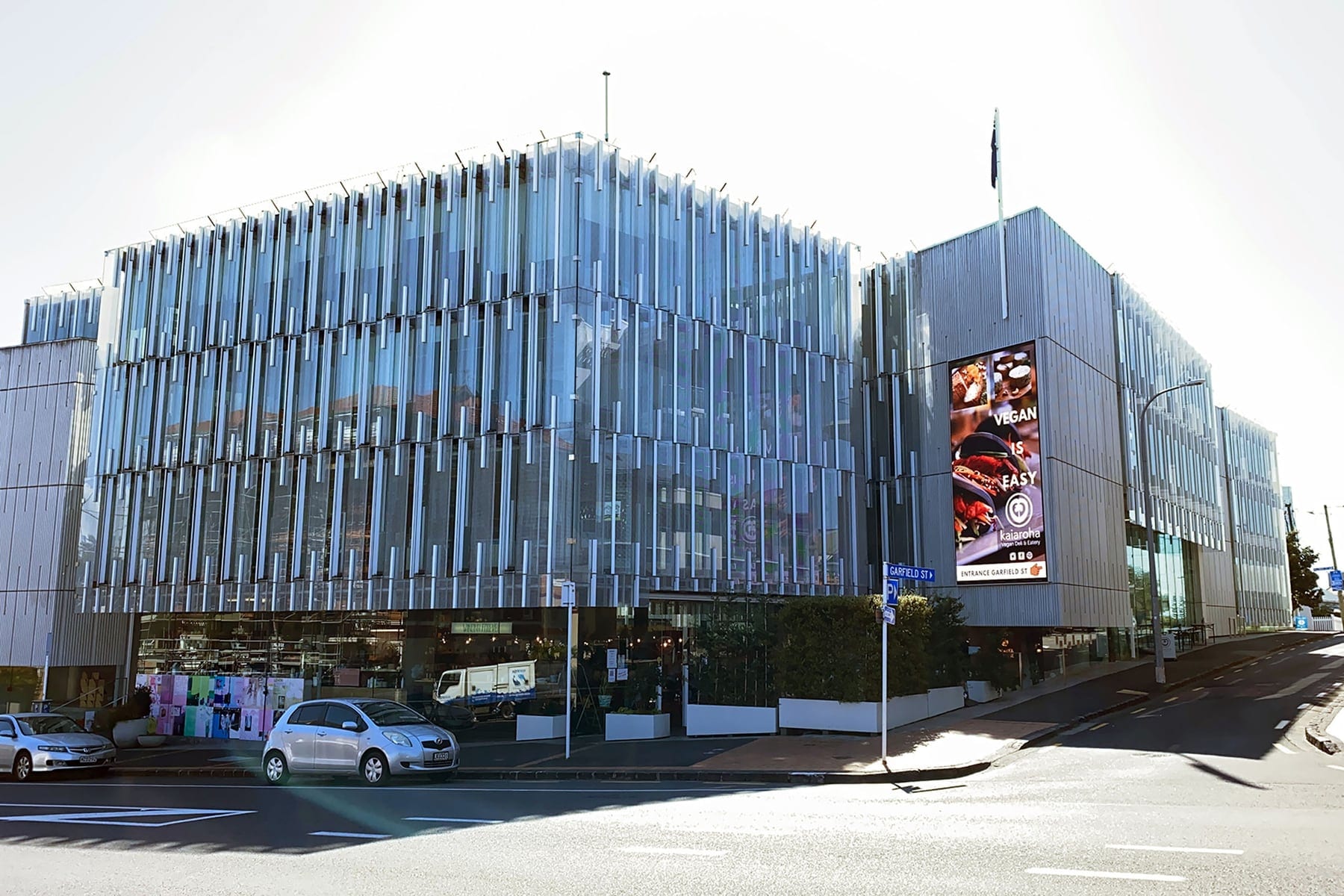
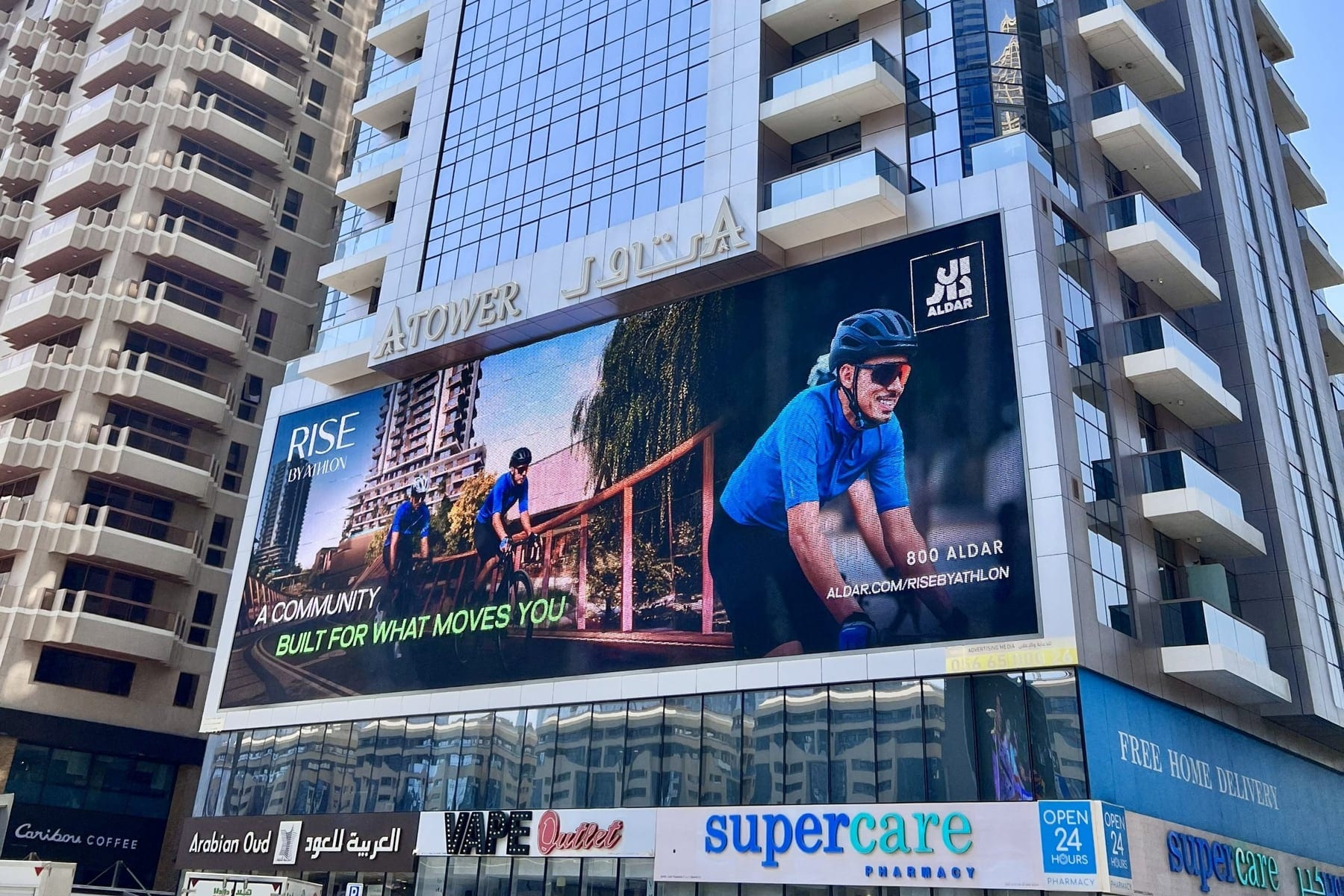
The strongest Turkish DOOH sites share two things: high, repeating traffic and a location the audience already associates with something. Mall façades lead: a large LED surface at the entrance or on the road-facing elevation sells advertising to national brands while promoting the mall's own tenants and events, and the owner controls both the site and the permit. Street billboards on main arteries and at busy junctions are the classic inventory, especially where a red light gives the whole loop an audience.
Petrol stations are an under-used case: a canopy fascia or forecourt screen reaches drivers who are stationary for several minutes, and the station uses the slots for fuel prices and shop promotions. Around stadiums the audience arrives in dense waves on match days, which suits sponsor content sold by the fixture rather than by the month. Airports combine long dwell time with a high-value audience on the approach road, the car-park routes and the terminal forecourt. In every case the screen earns most where people stop.
Making the switch from static to LED
If you own a site, start with the traffic count, a photomontage and a conservative revenue model at 60% occupancy, and check the permit path before choosing hardware; an application that already includes a structural report, an electrical project and a brightness schedule moves months faster. If you advertise, ask each site for its impression methodology and loop length, and buy dwell time rather than square metres.
Xeron designs, supplies and installs outdoor LED screens for DOOH across Turkey, from a single street billboard to a full mall façade, and supports the permit documentation, content pipeline and maintenance contract behind them. Our projects page shows completed outdoor sites; the Start a Project form is the quickest way to have a location assessed. Send the address and a photograph and we will return a pitch, size and brightness recommendation along with the documents the permit application will need.
Frequently asked questions
What is DOOH, or digital out-of-home advertising?
DOOH is advertising shown on screens in public spaces and sold to third parties as media: roadside LED billboards, mall façades, transit and airport screens, petrol-station canopies. Unlike a printed poster it carries a loop of several advertisers, changes content remotely and is bought on impressions, reach and CPM, the same metrics used online.
Does an LED advertising screen generate revenue for a building owner?
Yes, when the site has traffic. The owner sells a loop of six to ten ten-second slots by the month, and the return comes from occupancy across the year rather than from any single booking. Build the model with local rates: sellable slots, monthly rate, twelve months, realistic occupancy, less electricity, content, tax, insurance and maintenance. Model it conservatively before building.
Do I need a permit for an outdoor advertising LED screen in Turkey?
Yes. Municipal advertising regulations require a permit for a permanent screen, usually with a structural and electrical review, the consent of the building owners and the annual advertising tax; sites beside intercity roads involve the highways authority too. Brightness limits and night-time dimming are part of the conditions, so plan the light sensor and schedule from the start.
How many advertisers can rotate on one LED billboard?
Most loops carry six to ten advertisers with ten-second spots, giving a loop of sixty to a hundred seconds. Fewer slots mean each advertiser is seen more often and the loop is easier to fill; more slots raise the ceiling but dilute frequency. Where traffic flows freely, keep the loop short so each passer sees a complete spot.
At what times of day is an outdoor LED screen most effective?
Morning and evening commutes deliver the highest vehicle traffic, midday and weekends deliver shoppers, and evenings deliver leisure audiences. Because LED is bright enough for full daylight it works across the whole day, and day-parting lets an advertiser buy only the windows that match its audience, such as lunch offers before noon or cinema listings after dark.
Which pixel pitch does an outdoor advertising LED screen need?
It follows from the nearest typical viewer: 3.9 to 6 mm for pedestrian distances of 5 to 15 m, 6 to 8 mm for city streets at 15 to 30 m, 8 to 10 mm for main arteries at 30 to 60 m, and 10 mm or coarser for motorways. A finer pitch than the distance requires adds cost without adding legibility.