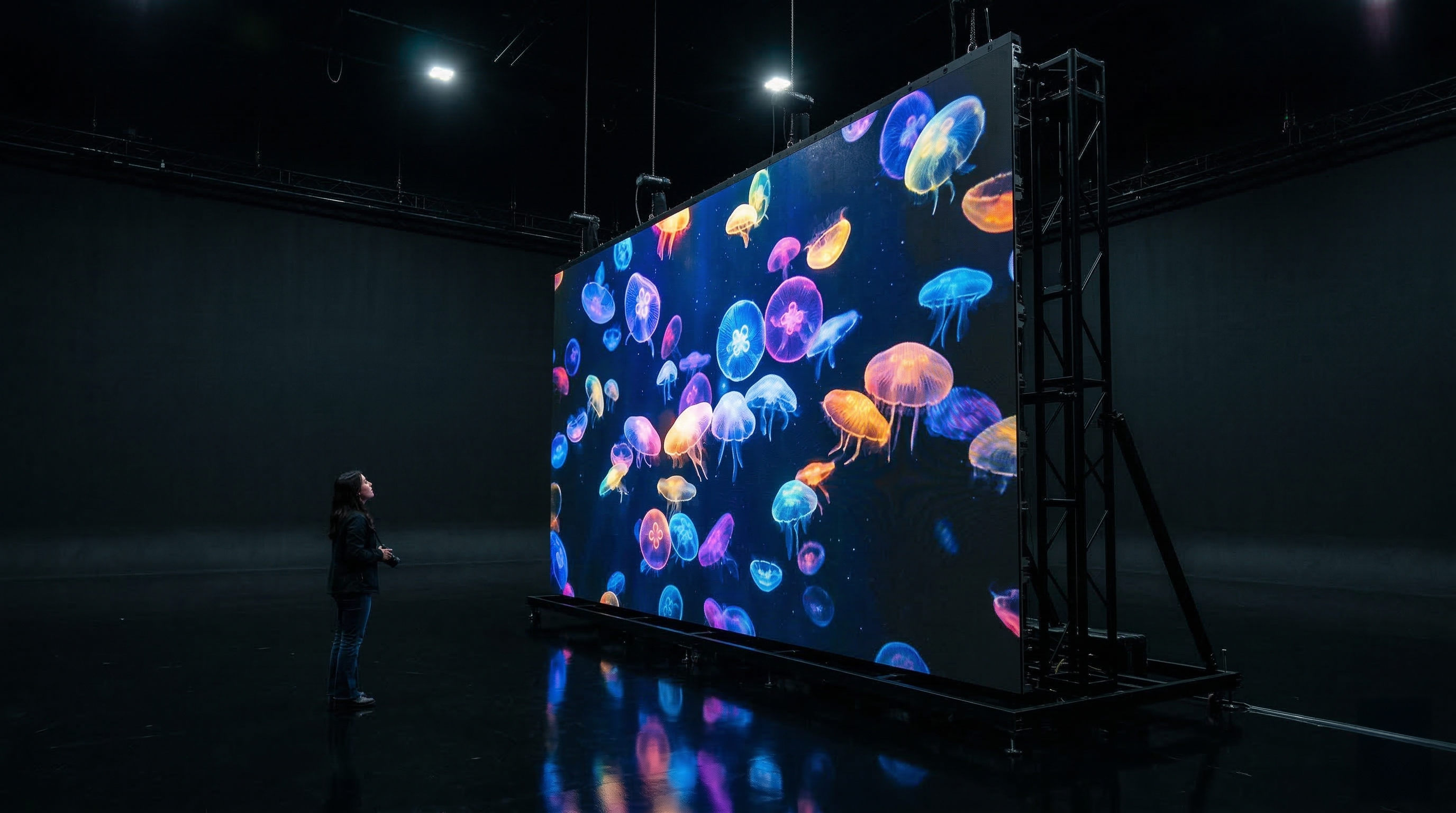



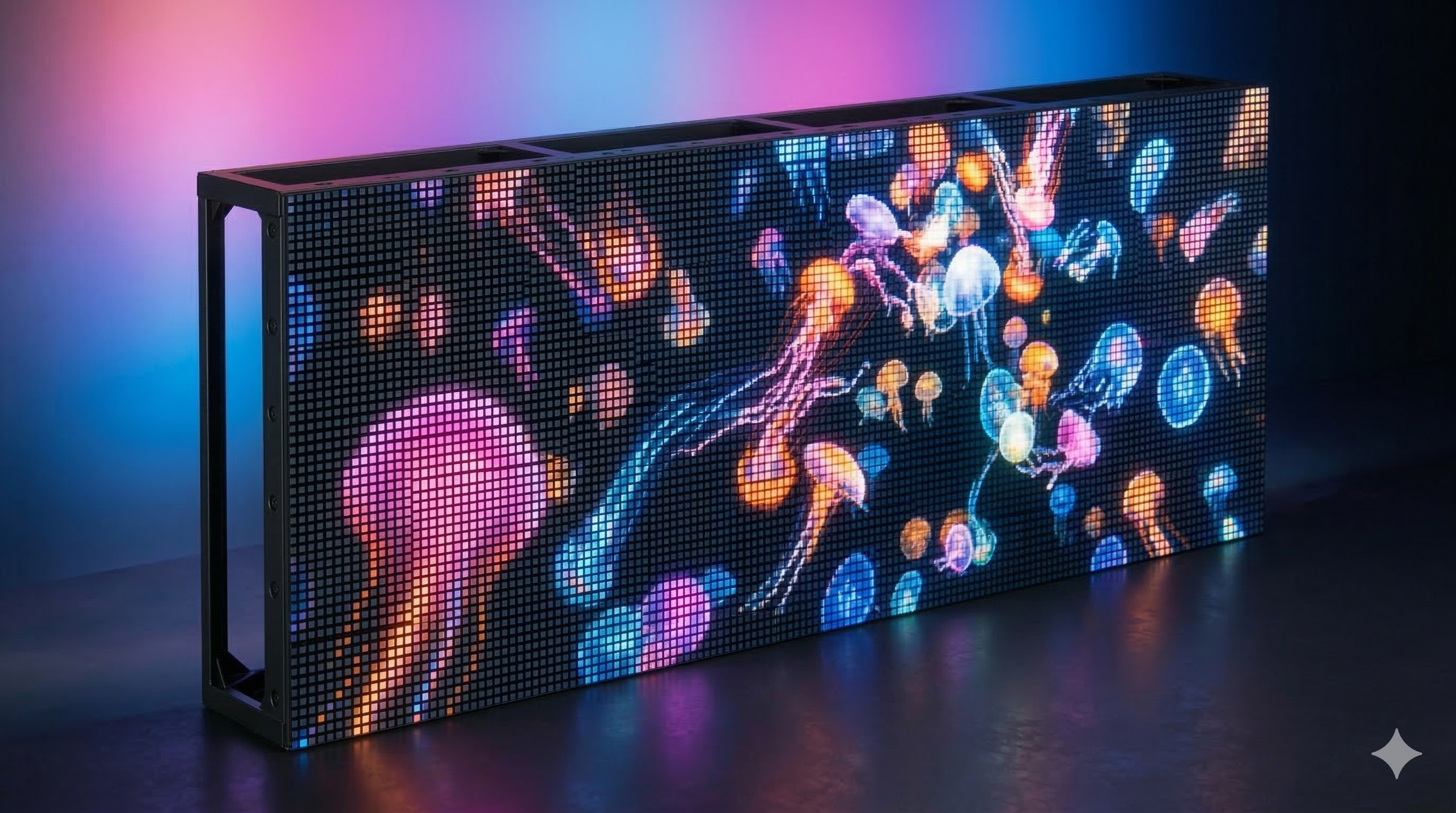
Efficiency as a Project Requirement
Energy efficiency is no longer an optional detail in LED display projects. It directly shapes operating cost, environmental impact, and the long-term stability of the system.
A sustainable project begins by choosing the correct product, brightness level, pixel pitch, cabinet architecture, and control strategy for the environment.
Reducing Unnecessary Power Use
A screen that is oversized or overpowered for its location consumes unnecessary energy and creates avoidable heat. Intelligent brightness control helps prevent this by adjusting output according to ambient light and real usage conditions.
The image stays clear while the system avoids waste.
Efficient Hardware Design
Modern LED systems can reduce power demand through efficient power supplies, optimized driving technologies, passive thermal design, and stable control infrastructure.
Lower heat also supports longer component life, more stable performance, and easier maintenance.
Durability Is Part of Sustainability
A display that operates reliably for many years is more sustainable than one that requires frequent replacement. Serviceable modules, accessible components, and planned maintenance reduce material waste and downtime.
Long-term value comes from building a system that can be cared for, not simply installed.
A Full Life-Cycle Approach
Xeron approaches sustainability as a full life-cycle discipline. From product selection and installation to maintenance and long-term operation, energy efficiency becomes a practical way to protect both project budgets and visual performance.