


Designing for the Interior, Not Against It
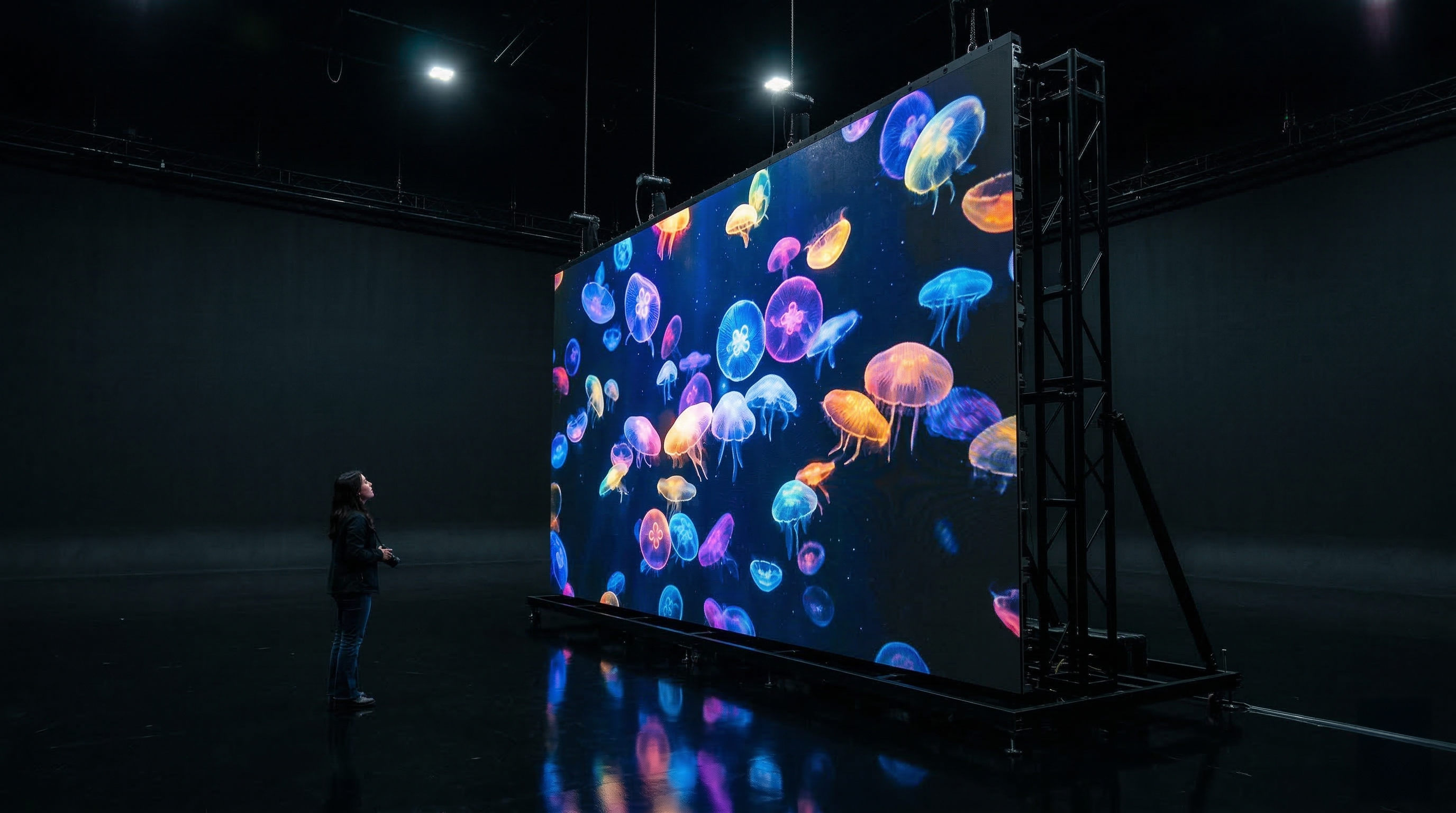
Indoor LED screens should not feel like equipment placed into a room at the last minute. They should support the architecture, match the viewing distance, and create a comfortable visual experience for people who may stand only a few meters away.Using outdoor-level brightness indoors can create eye fatigue and discomfort. A successful indoor project begins with calibrated light, appropriate resolution, and a clear understanding of how the space will be used.
Architectural Integration and Seamless Surfaces
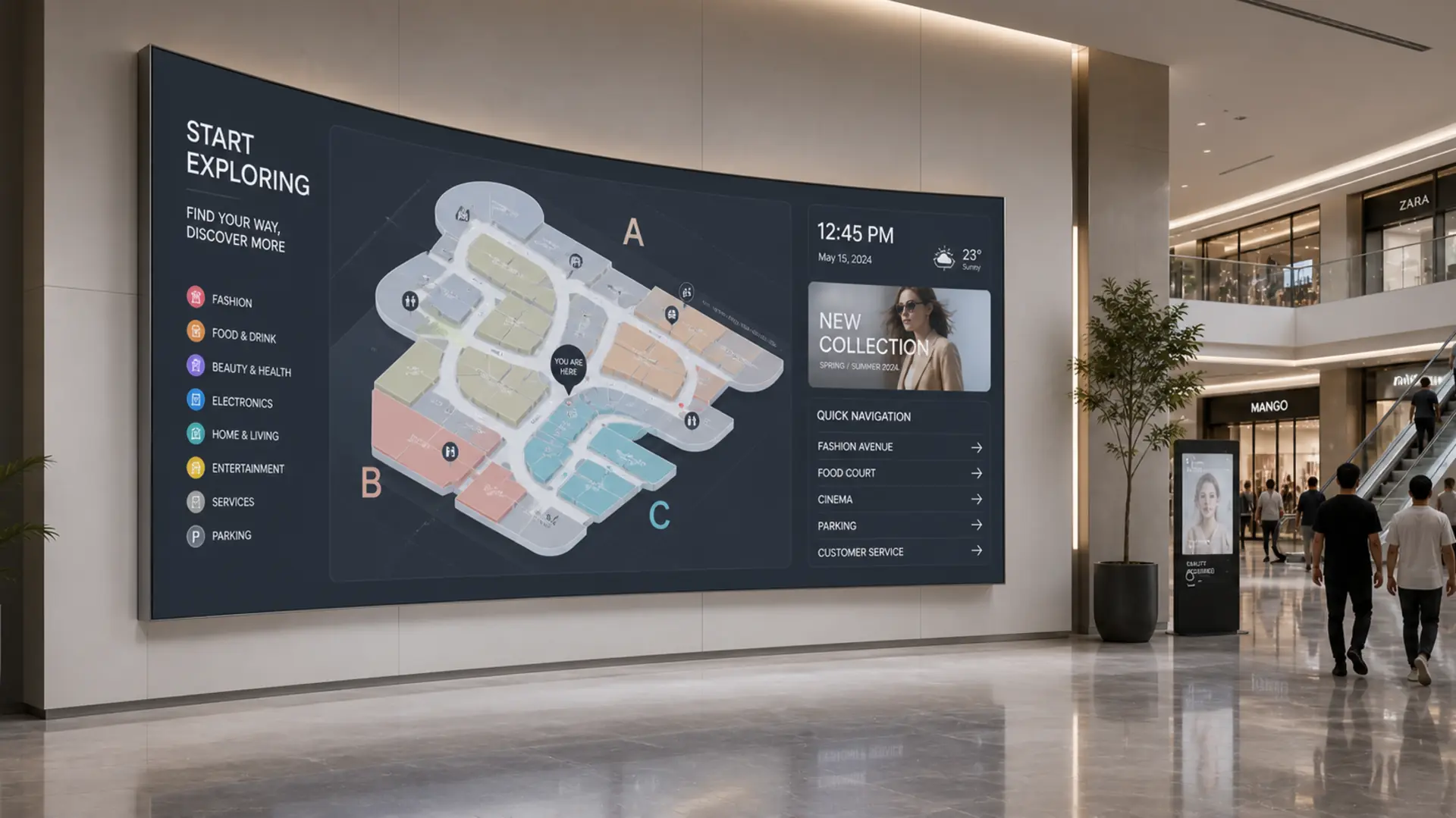
Fine cabinet alignment, careful mounting, and clean cable planning help the display become part of the interior language. In premium environments, visible gaps, uneven modules, and bulky frames weaken the overall impression.
A seamless installation lets the content take priority while the technology quietly disappears into the space.
Choosing the Right Pixel Pitch
Pixel pitch should be selected according to the closest viewing distance. Meeting rooms, showrooms, museums, lobbies, and retail interiors often require tighter pixel pitches than outdoor environments because viewers are much closer to the surface.
The right choice keeps text sharp, product images clean, and video content comfortable to watch.
Front Service and Space Optimization
Indoor spaces rarely have unlimited back access. Front-service cabinet designs make maintenance easier without requiring deep wall cavities or large technical rooms behind the display.
This is especially important in corporate interiors, retail stores, and hospitality projects where every centimeter of space matters.
Silent Operation and Heat Management
A screen inside a quiet environment must not introduce distracting fan noise or uncomfortable heat. Thermal planning, efficient power design, and suitable brightness settings are key to long-term comfort.
Xeron treats indoor LED installation as a balance between technical performance and architectural refinement.